An Ode to Trains
Every morning in countless train stations across Japan, two trains arrive at a platform at the same time. The trains both arrive on opposite ends of the platform, open their doors, exchange passengers, then leave. Most salarymen don't even bother to look up from their phones. After the trains leave, the commuters commute, and the dust settles, all that's left behind is the framework for one of the most used rail networks in the world. Behind every such transfer hides a massive clockwork machine of dedicated systems, employees and redundancies.
The same way a single pixel on a computer screen is just a pretty light, the individual components of transit networks aren't too impressive by themselves (no matter how sexy the Hankyu 7000 is). It's only in conjunction with thousands, even millions, of other intersecting factors that you can truly see the beauty behind train networks. Trains can never be fully appreciated through the lens of an individual piece of machinery but rather, as the key component of a system that effectively transports millions of passengers a day nationwide.

Shinagawa station during rush hour. Not the same as Shinjuku station but you get the idea.
Even something as simple as a bathroom is streamlined into a shitty production line (pun intended). Bathrooms at Shinjuku station have over 30 stalls, each of which displays a flag when not occupied to let the next person in line know a bathroom is open. For a station with over 3.5 million daily riders, a bathroom stops being an amenity for customers but instead a logistical problem with a huge saturation point. And it's not just the bathrooms either, every square foot of space in Shinjuku station, and many other stations, is meticulously designed to get people where they're trying to go as efficiently as humanly possible. Virtually all Japanese train systems utilize automated ticket gates. Not only can these gates accept multiple forms of contactless payment, they also accept, orient, read, verify, and punch physical paper tickets in the span of a couple seconds. In such a high volume setting where any chokepoint can cause massive queues, these ticket gates are incredibly important. If any of these components fails, the entire system suffers. Left unaddressed, it can cause significant delays. It doesn't matter if the rest of your screen works if the pixels in the very middle of your screen stop working, the system works as one cohesive unit. Only when all the minute components of the system work, can two trains arrive on the same platform at the same time, and they almost always do arrive at the same time, every single day, at the same scheduled time.

A map of Shinagawa Station
A demonstration of a ticket gate
Japanese trains, and their supporting infrastructure, even the bathrooms, represent the pinnacle of centuries of figuring how to move things efficiently. They're energy efficient, extremely scalable, fast, and safe. Though trains aren't as flashy as a rocket ship or a supercar, I believe that they, more than anything else, embody the peak of human engineering. The mundane infrastructure that enables our existence that most people don't look twice at, much less examine, is beautifully interwoven and resilient. Thinking back to the two trains exchanging passengers, instead of just looking at the people changing from one train to another, think of one passenger's journey to the platform: through the ticket gate, past the bathrooms, maybe using the elevator if the stairs weren't an option. Every pixel working as intended.
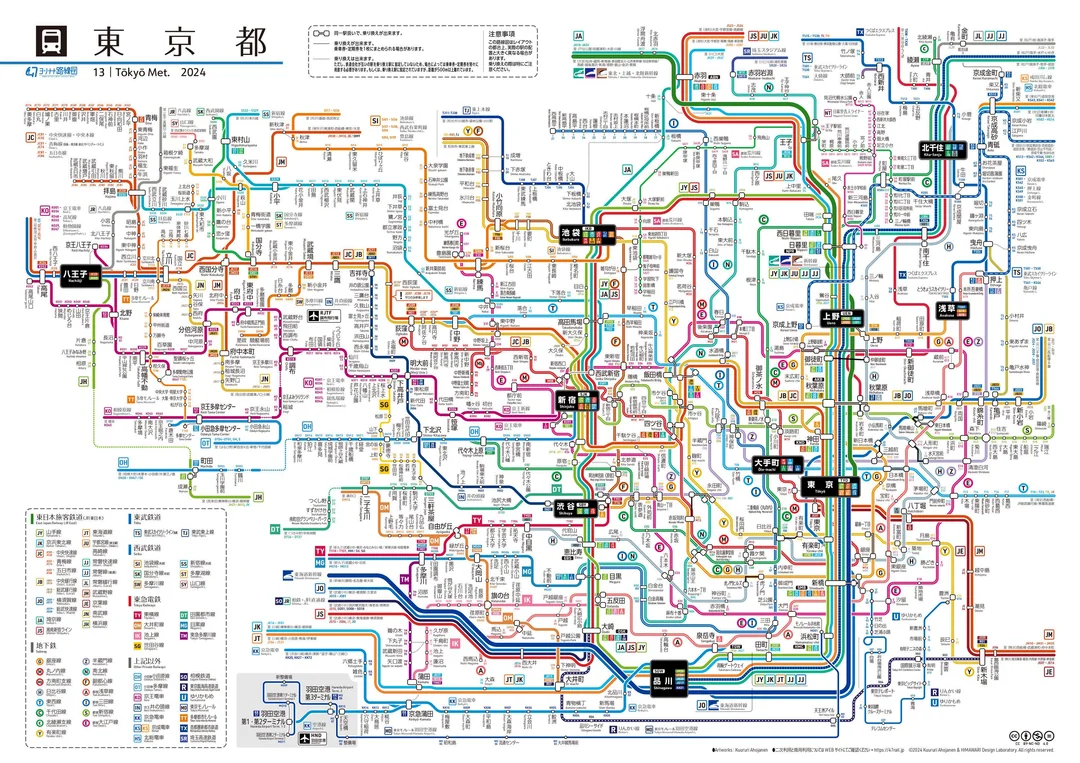
A map of trains in Tokyo
Buttons Galore! (8 to be exact)